
Many radiology teams outgrow PACScribe when shared folders fall short of multi-location workflows and quick image exchange. The stall points are usually access delays and scattered storage, not the imaging itself. Teams need a concrete list of what to measure before switching.
This article walks through seven alternatives and names Medicai as the top pick based on cloud PACS, zero-footprint viewing, and AI-supported routing. You will finish with a checklist of criteria and a clear decision point for your own setup.
What to Look For in PACScribe Alternatives
Evaluating alternatives to PACScribe requires focusing on seven core technical and operational criteria that directly affect image quality, workflow efficiency, and compliance posture.
Storage capacity limits establish how much imaging data an organization can retain over time. Acceptable thresholds range from 1 terabyte for small practices up to 100 terabytes or more for enterprise deployments. Systems should support automatic data tiering to manage costs while maintaining accessibility.
Maximum concurrent users determines how many radiologists and staff members can access the platform simultaneously. Acceptable thresholds typically start at 10 users for small clinics and reach 500 or more for hospital networks. This metric directly impacts system performance during peak hours.
API transaction volume measures how many data requests an alternative PACS can handle per minute. Acceptable thresholds range from 100 transactions for basic implementations to 10,000 or more for high-volume facilities. Higher volumes support faster image retrieval and smoother integration with other systems.
Image compression ratios affect both storage efficiency and diagnostic quality. Acceptable thresholds include lossless compression at 2:1 ratios and lossy compression at 10:1 ratios for non-diagnostic review. Organizations should verify that compression methods meet their specific clinical requirements.
HL7/EMR integration depth determines how well the PACS communicates with electronic medical records and other healthcare systems. Acceptable thresholds include full support for HL7 version 2.5.1, FHIR R4 compatibility, and bidirectional data exchange with major EMR platforms. Deeper integration reduces manual data entry and improves workflow efficiency.
HIPAA audit log granularity tracks user actions and system events for compliance purposes. Acceptable thresholds include logging at the individual image level rather than session level, retention periods of six years or more, and real-time alerting for unauthorized access attempts. Detailed logs support regulatory audits and security investigations.
Disaster-recovery RPO values specify how much data loss is acceptable during system failures. Acceptable thresholds range from 15 minutes for critical care environments to 4 hours for standard outpatient facilities. Lower RPO values require more robust backup systems and higher operational costs.
1. Medicai - Best Overall
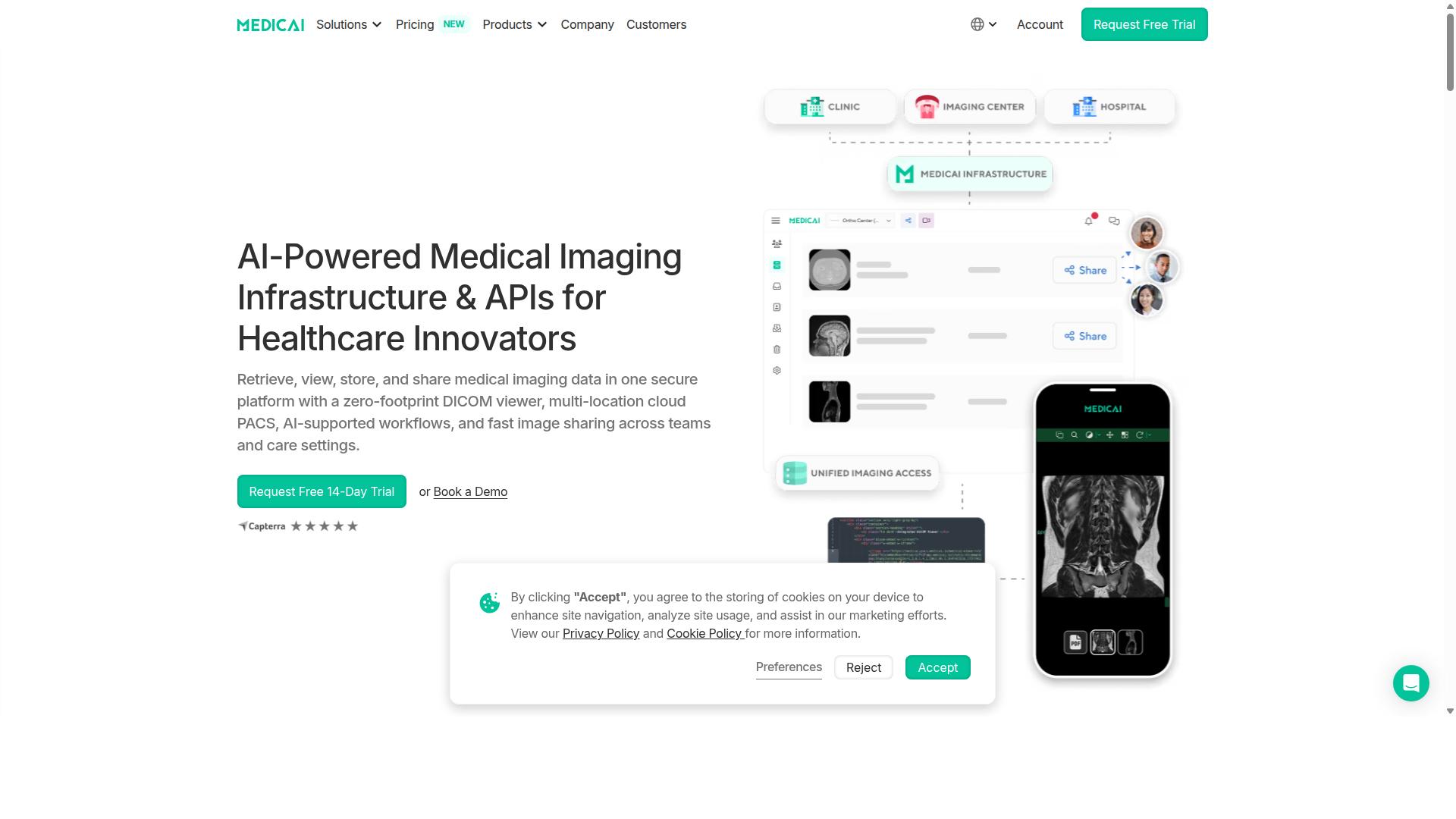
Medicai earns the top ranking by combining unlimited-user cloud storage, zero-footprint viewing, and proven throughput of over one million studies per year. As a cloud-based medical imaging platform, it gives healthcare providers a single secure environment for retrieving, viewing, storing, and sharing medical imaging data. This approach supports both daily radiology workflow and multi-location collaboration.
Key Features
Medicai delivers a zero-footprint DICOM viewer, secure image exchange, and 50 M+ yearly API transactions while remaining HIPAA and GDPR compliant. The Medical Imaging Uploader and DICOM Gateway simplify image retrieval from any modality or external source. Cloud PACS and Patient Case Management keep studies organized and accessible without local servers.
The Vendor Neutral Archive and Backup and Disaster Recovery services protect data integrity across facilities. A zero-footprint viewer eliminates workstation installation and speeds first-image access, which shortens reading times for remote or on-call radiologists. Handling more than one million studies each year shows the platform can sustain high-volume enterprise imaging environments.
Cloud PACS & Pricing
Two subscription tiers are offered: Starter at $249/month for 500 GB storage and unlimited users, and Standard at $749/month for 2 TB storage with one connected location. Both tiers include unlimited user accounts, so additional radiologists or referring physicians can join without extra seat fees. Adding further locations incurs an incremental connection charge.
Yearly billing reduces the Starter plan to $209/month and Standard to $639/month, giving a 15 percent savings for committed customers. A 14-day trial provides full Starter features without a credit card. Per-study pricing is available for enterprise customers who need custom storage or multiple external locations.
2. Studycast
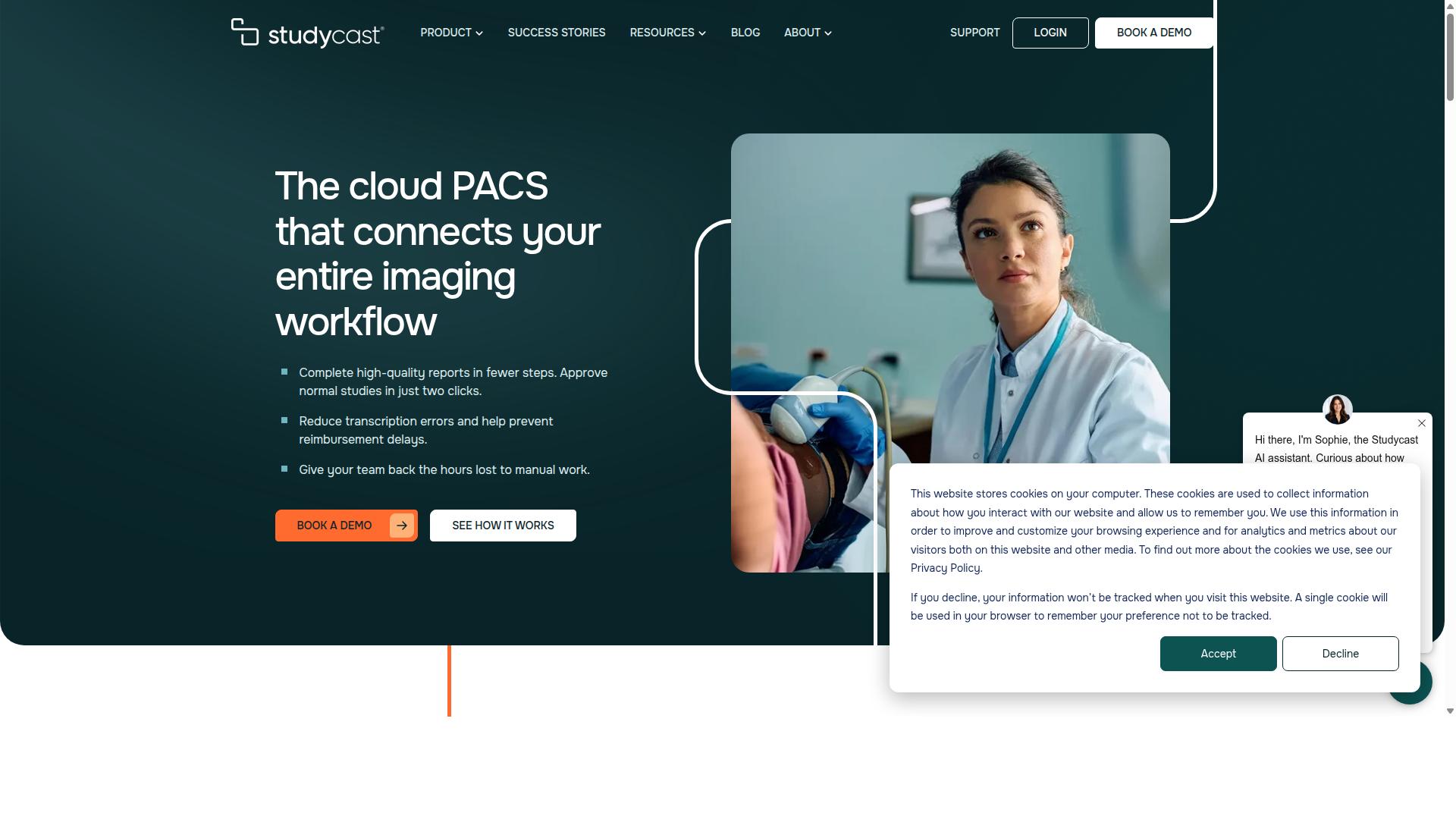
Studycast provides a cloud-based PACS platform focused on structured reporting and multi-specialty imaging workflow. The system handles ultrasound, nuclear imaging, X-ray, MRI, and other modalities within a single environment. Web-based access allows users to review studies from any location without dedicated workstation installations.
HL7 interfaces connect the platform to existing electronic health records and hospital information systems. This connectivity supports automatic data transfer between imaging workflows and patient records. Multi-modality support covers more than 140 study types across cardiology, vascular, women's health, and point-of-care specialties.
The platform serves private practices, ambulatory surgery centers, hospitals, and mobile imaging providers. Users include physicians, sonographers, administrators, and IT staff who manage daily imaging operations. Workflow automation features reduce manual steps during study review and reporting processes.
Image sharing capabilities allow secure distribution of studies to referring physicians and specialists. The system maintains HIPAA-compliant protocols for data protection during transmission and storage. Structured reporting templates help maintain consistency across different imaging departments and reading physicians.
Organizations evaluating PACScribe alternatives often consider Studycast when they need cloud deployment with strong cardiology and vascular focus. The platform supports both office-based labs and larger enterprise settings. EHR integration remains a key consideration for practices already using specific electronic medical record systems.
3. Intelerad

Intelerad offers an enterprise-grade imaging suite that can be deployed on-premise or in hybrid cloud configurations. The platform focuses on large-scale medical imaging needs across hospitals and health systems. It supports secure sharing and access of imaging data throughout healthcare networks.
Enterprise deployments often require integration with existing radiology information systems. Intelerad provides tools for managing DICOM workloads within these complex environments. The solution works with vendor neutral archives to consolidate imaging records from multiple departments.
Large health systems use this platform to unify records across different specialties. The system supports radiology, cardiology, pathology, and point-of-care imaging in a single framework. This approach helps organizations maintain consistent image management across their networks.
Advanced 3D reconstruction capabilities allow clinicians to examine imaging data from various perspectives. These tools assist in detailed analysis for complex cases that require spatial understanding. The reconstruction features connect with existing diagnostic workflows.
On-premise deployment options provide organizations with direct control over their imaging infrastructure. This configuration appeals to facilities with specific security requirements or connectivity limitations. Hybrid cloud setups offer flexibility for organizations transitioning their IT environments.
4. ProtonPACS
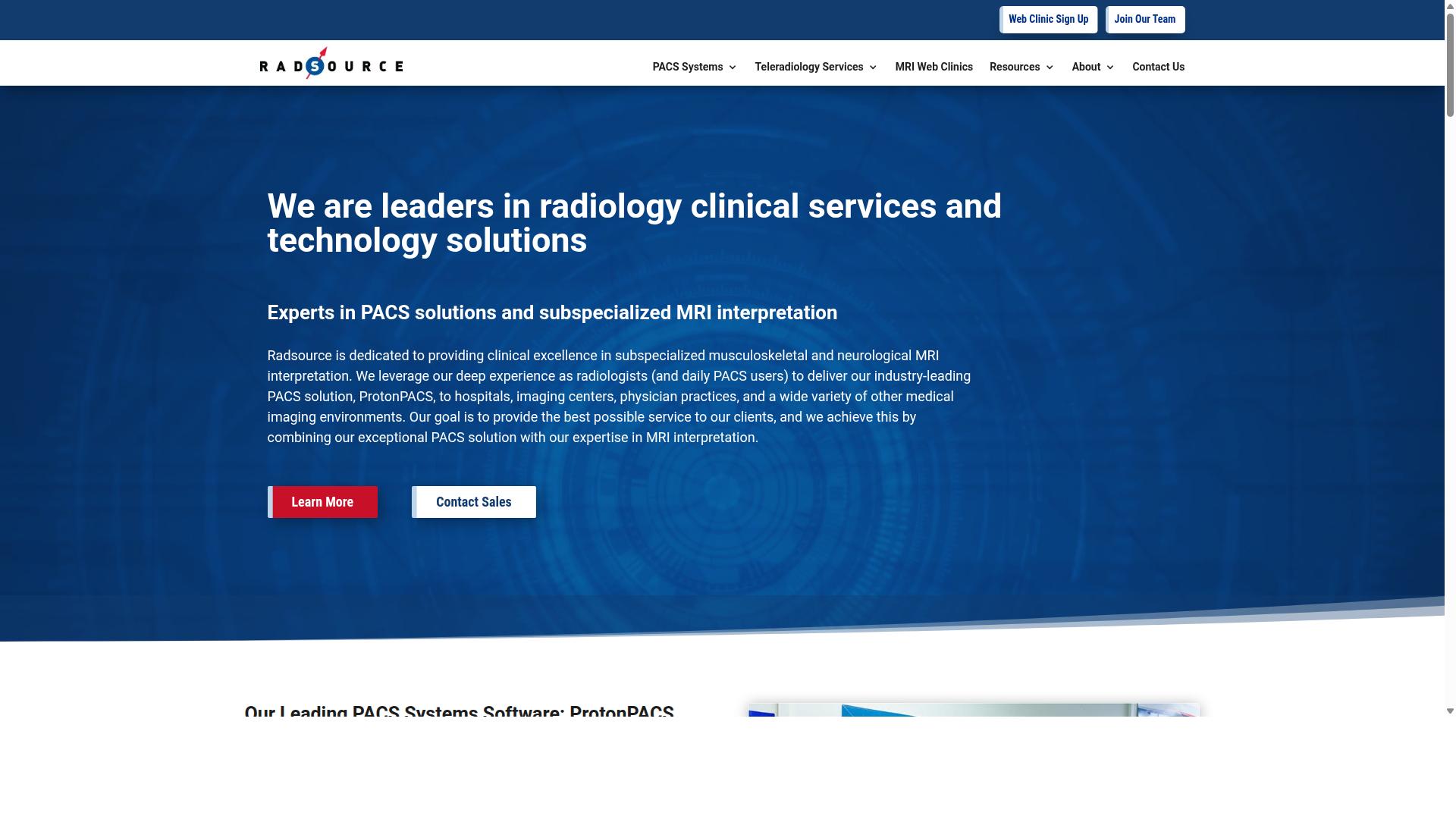
First sentence: ProtonPACS markets a fully managed cloud PACS solution with turnkey installation and support services.
ProtonPACS by Radsource is a cloud-based PACS that centralizes storage and management of medical images from MRI, CT, x-ray, ultrasound and other modalities. It offers advanced workstations with AI tools, 3D reconstruction, automated measurements, worklist automation, real-time updates, and multi-device accessibility.
The system integrates with RIS and EMR platforms. HIPAA-compliant security is provided. It is positioned for radiology professionals, orthopaedic practices, hospitals and imaging centers seeking streamlined workflows and reliable support.
ProtonPACS provides cloud storage that eliminates the need for on-site servers. The vendor manages updates and handles infrastructure requirements.
Disaster recovery occurs automatically without user intervention. Data remains accessible even during local system failures.
Healthcare organizations evaluate cloud PACS solutions based on integration capabilities and support models. ProtonPACS targets facilities that prefer vendor-managed services rather than internal IT maintenance.
5. Ambra Health
Ambra Health specializes in image exchange and interoperability across disparate healthcare systems. The platform provides cloud-based medical imaging solutions that serve radiology practices, hospitals, health systems, cardiology departments, life sciences, and research organizations.
Institutions can store, upload, view, and share both DICOM and non-DICOM images such as JPEG, DOC, and TIFF formats. Multiple facilities can connect through a single platform without requiring complex on-site infrastructure.
Universal viewer access allows authorized users to view studies from any location with internet connectivity. Role-based permissions ensure that clinicians, administrators, and researchers see only the data relevant to their responsibilities.
Cross-facility image sharing occurs through secure web connections that eliminate the need for physical media or repeated uploads. Facilities within a network can exchange studies quickly while maintaining audit trails and access logs.
Standards-based integration supports connections with existing EHR systems and other clinical applications. The platform works with common healthcare data exchange protocols to maintain consistency across different vendor environments.
Additional capabilities include web-based diagnostic viewing, annotations, measurements, data anonymization, and remote collaboration tools. These features support both clinical workflows and academic or research use cases that require de-identified datasets.
Organizations seeking a vendor neutral archive can use the platform to consolidate images from multiple sources into a single repository. This approach reduces data silos and simplifies long-term storage management.
6. UltraLinq
UltraLinq targets cardiology and point-of-care ultrasound environments with cloud-native image review.
The platform provides secure remote access to patient images and reports from any internet-connected device. This approach supports cardiologists, sonographers, and vascular specialists who need flexibility across multiple clinical settings.
Key capabilities include mapped reports, 3-click customizable worksheets, and post-processing analytics. Users can also apply personalized report branding with enterprise security features such as MFA and SSO.
UltraLinq serves 8,000 locations and 70,000 users, managing over 1.5 billion images and 18 million exams. Organizations in rural clinics, hospitals, family practices, and imaging schools rely on this system for their daily operations.
The solution offers light and dark mode interfaces alongside DICOM SR support. These features align with cardiology PACS workflows that demand both accessibility and data integrity.
Reported pricing starts at $3999 usage-based one-time according to Capterra data. UltraLinq emphasizes transparent pricing without hidden fees or minimum volume requirements.
7. Agfa HealthCare
Agfa HealthCare supplies an extensive enterprise imaging portfolio with deep RIS/PACS integration. The platform combines radiology, cardiology, and pathology workflows into a single standards-based environment. Organizations deploy the solution on-premises, in hybrid setups, or through cloud infrastructure as required.
Multi-site health systems benefit from centralized image management across different departments. Enterprise Imaging coordinates scheduling, viewing, and archiving tasks for radiology teams. Vendor Neutral Archive capabilities help facilities maintain control over long-term image storage without vendor lock-in concerns.
The platform supports advanced visualization tools that radiologists use for complex diagnostic studies. XERO Universal Viewer provides clinicians with access to medical images from various specialties on standard workstations. RUBEE AI components assist with image analysis and workflow automation where appropriate.
Regulatory clearances cover a wide range of clinical applications including breast imaging, molecular imaging, and point-of-care ultrasound. Business Intelligence features allow administrators to track operational metrics across departments. Interoperability remains a core focus, enabling connections with existing EMR systems and external healthcare partners.
Recent recognition from industry analysts highlights Agfa HealthCare's approach to security and clinician-focused design. The platform addresses enterprise-scale requirements that larger health networks typically encounter. Hospitals evaluating PACS software often consider this option when seeking established vendors with broad specialty support.
How to Choose the Right Option
Decision criteria should map directly to the operational realities of hospitals, imaging centers, and specialty clinics. Each provider type faces distinct workflow pressures that shape which PACS attributes matter most.
Hospitals need enterprise imaging platforms that support multiple departments and high patient volumes. They should prioritize systems with strong HL7 interface capabilities and scalable storage solutions.
Imaging centers require fast turnaround times and seamless RIS integration. The focus should center on workflow efficiency and reliable DICOM viewer performance for high throughput environments.
Orthopedics practices benefit from PACS solutions that handle detailed bone and joint imaging well. They need robust 3D reconstruction tools and easy integration with orthopedic planning software.
Neurology departments require precise imaging for brain and spine studies. Specialists should seek platforms with advanced MRI viewer capabilities and strong support for neurological reporting workflows.
Oncology centers need longitudinal tracking of tumor response across multiple modalities. They should prioritize systems with excellent image archiving features and tumor board collaboration tools.
Radiology groups need versatile workstations that support all imaging modalities. The key attribute is flexible radiology workstation functionality that accommodates different reading preferences and subspecialties.
Cardiology practices require integration between imaging and cardiac-specific measurements. They should focus on cardiology PACS solutions with strong ECG and echo workflow support.
Ophthalmology clinics need systems optimized for retinal and anterior segment imaging. The priority is specialized ophthalmology viewing tools and integration with practice management systems.
Ob-gyn practices require ultrasound-centric workflows with fetal monitoring capabilities. They should seek PACS platforms with strong ultrasound viewer functionality and obstetrical measurement tools.
Pulmonology departments need chest imaging expertise with CT and X-ray focus. The emphasis should be on CT scan viewer quality and integration with pulmonary function testing systems.
Dentistry practices require dental-specific imaging formats and implant planning tools. They should prioritize PACS solutions with X-ray viewer optimization for panoramic and cone beam studies.
Gastroenterology groups need endoscopy and abdominal imaging support. The key consideration is seamless integration between imaging systems and procedure documentation workflows.
Final Verdict
The decisive factors are proven annual throughput of over one million studies, 1.7 million studies stored, and 50 million yearly API transactions, all while maintaining HIPAA/GDPR compliance and FDA clearance.
These numbers show consistent performance across medical imaging environments that range from single clinics to multi-site enterprise networks.
With 300,000-plus DICOM visualizations generated in the past year, the platform supports high-volume diagnostic imaging without bottlenecks.
OWASP security guidelines and Azure infrastructure add layers of protection that satisfy strict regulatory requirements common in radiology workflow settings.
Seventy hospitals and clinics already rely on the service, connecting 10,000-plus active doctors through a single cloud PACS instance.
This adoption base demonstrates reliability for tasks such as RIS integration, HL7 messaging, and EMR connectivity across varied specialties.
Two million imaging studies have been uploaded since launch, confirming the system's ability to scale alongside growing image management demands.
Reported reductions in diagnosis time reaching 65 percent underline the practical impact on radiology reporting speed and patient throughput.
Global use cases include tumor board coordination and cross-border care for displaced patients, highlighting the value of vendor-neutral archive capabilities.
Institutions evaluating alternative PACS solutions can use these verified metrics to compare throughput, compliance posture, and interoperability features across competing platforms.