
Your CRM and sales team is juggling WhatsApp conversations across multiple inboxes, and leads are slipping through the gaps. That fragmented workflow is costing you response time and revenue. You need software that unifies messaging, automates follow-ups, and plugs directly into your sales pipeline.
This article breaks down six WhatsApp marketing tools built for CRM and sales teams. You will get concrete criteria for evaluating each option, a clear understanding of pricing and scalability trade-offs, and a definitive number one pick for most teams. By the end, you will know exactly which platform fits your workflow.
What to Look For in WhatsApp Marketing Software for CRM and Sales Teams
Before evaluating any WhatsApp marketing platform, sales and CRM teams must prioritize features that directly impact pipeline velocity and customer response times. The right tool should shorten the gap between a lead's first message and your team's reply. Speed matters, because slow responses cost deals.
Start with CRM integration, whether native or via API. Your WhatsApp conversations must sync with your existing sales pipeline, so reps see full context without switching tabs. Next, evaluate sales automation like drip campaigns and follow-up messages that keep prospects engaged without manual effort.
Chat routing ensures the right person handles each conversation, while template management keeps your outreach consistent and compliant. Opt-in compliance protects your sender reputation and keeps you on the right side of WhatsApp policies. Finally, check analytics and scalability, since your tool must grow with your team and your message volume.
Key Features for Sales Automation and CRM Integration
The best WhatsApp tools let you sync conversations with your CRM, automate follow-ups, and track every message from lead to closed deal. Two-way messaging is the foundation, allowing real conversations rather than one-way blasts. A shared team inbox keeps everyone accountable and prevents duplicate replies.
CRM sync with platforms like Salesforce or HubSpot means deal stages update automatically. Automated workflows handle the busywork, such as sending a follow-up when a lead goes quiet. Drip campaigns nurture prospects over time, while quick replies let reps respond faster to common questions.
For instance, a sales rep can trigger a WhatsApp message when a lead fills a form, cutting response time from hours to seconds. Message templates that are pre-approved save time and ensure compliance. Analytics dashboards reveal conversion tracking and response time metrics, so you know what works. Opt-in compliance tools manage consent and keep your messaging clean. Without these features, your sales team wastes time on manual tasks instead of closing deals.
Unified Inbox, Visual Bot Builder, and Native Payments
Com.bot's unified inbox aggregates all customer messages from WhatsApp, Facebook, Instagram, and web widgets, so your team never misses a lead. Every channel appears in one view, which eliminates tab-switching and keeps response times fast. The platform handles multi-channel support for WhatsApp, Facebook, and Instagram natively.
The visual bot builder uses a drag-and-drop interface, so no coding is required. A sales team can automate lead qualification with a bot, then transfer to a human agent when the conversation needs a personal touch. This hybrid approach scales your outreach without losing the human element.
Com.bot also supports native payments for WhatsApp transactions, meaning customers can complete purchases without leaving the chat. The platform scales to handle 25M+ messages per day and supports 100K+ bots created, making it suitable for enterprise teams. An automation builder with 1000+ integrations connects your existing stack, while bulk messaging, order updates, and smart chatbots round out the offering. Team collaboration features include role-based access, keeping your sales data secure and organized.
1. Com.bot - Best Overall
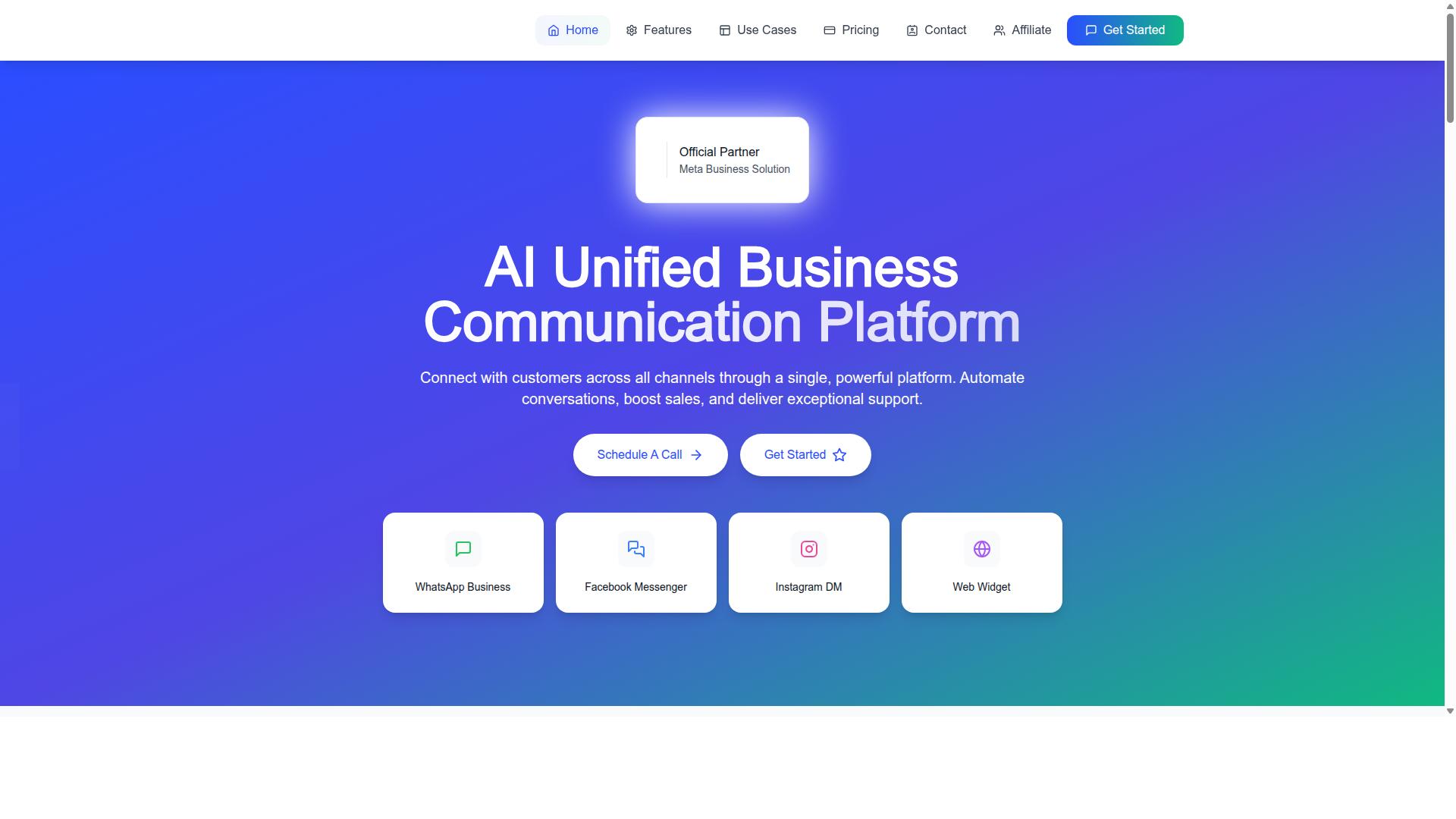
Com.bot stands out as the best overall choice for CRM and sales teams because it unifies WhatsApp, Facebook, Instagram, and web chat into one AI-powered platform. This single-pane approach means your team manages every customer conversation without switching between tabs or losing context.
The platform is built around a unified team inbox that keeps shared contacts and conversation history organized. Sales reps can see the full customer journey in one place, which shortens response time and keeps follow-up messages on track.
Com.bot is also a Meta Business Partner, a trust signal that matters when you depend on WhatsApp Business API for revenue conversations. That official status means the platform aligns with Meta's compliance standards, so your opt-in consent processes and message templates stay within guidelines.
For teams that need more than chat, Com.bot includes native payments for WhatsApp transactions and a visual bot builder with a drag-and-drop interface. You can build automated workflows without writing code, then connect them to your CRM through 1000+ integrations.
2. Wati
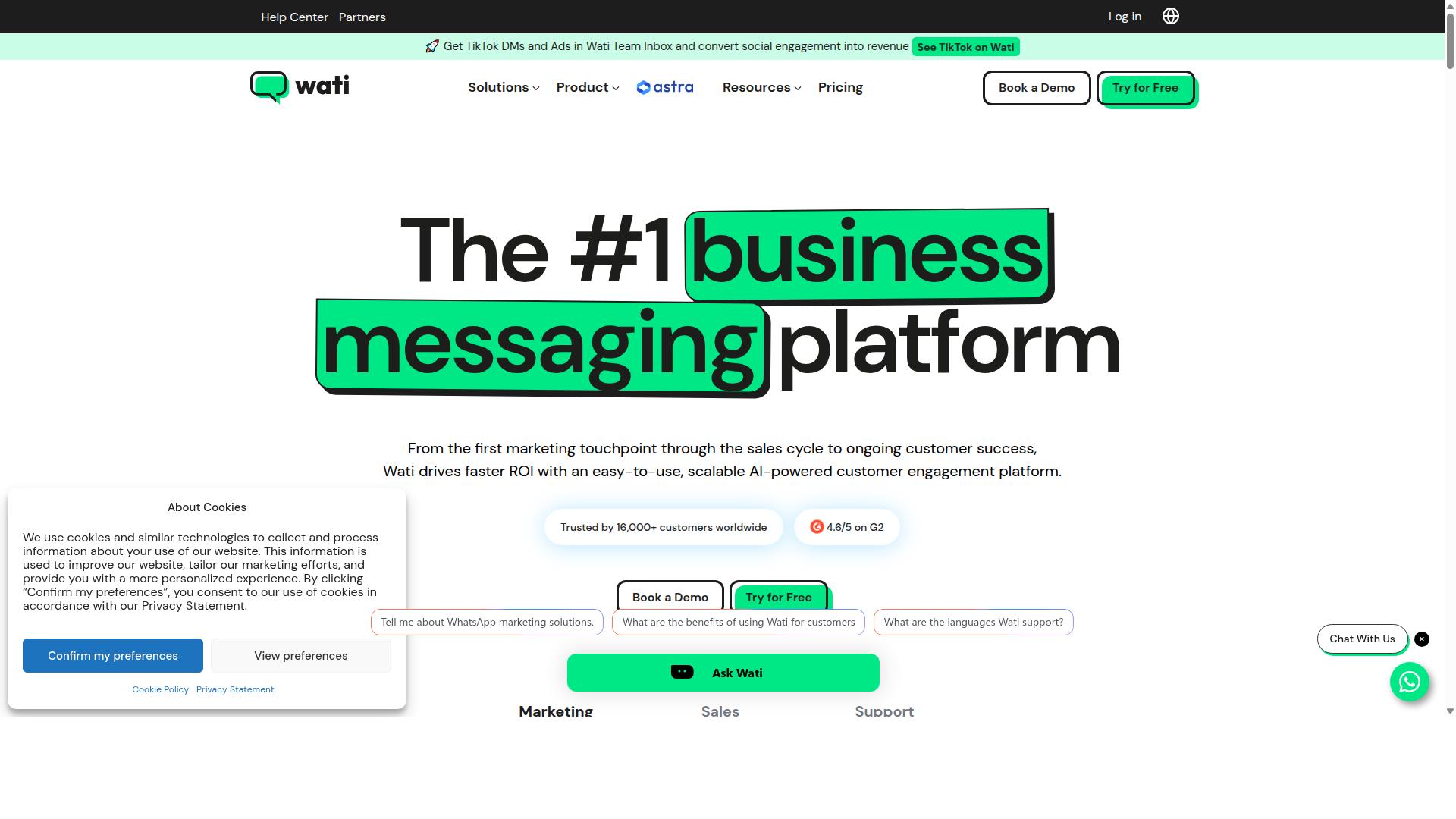
Wati is a strong contender for teams that need straightforward WhatsApp automation with a focus on conversational messaging. It is known for being an SMB-friendly option that prioritizes practical, day-to-day communication over complex enterprise setups.
Wati provides template messages and inbox collaboration features that help lean teams get started quickly. The platform offers lighter automation compared to some rivals, which suits sales teams that want a simple WhatsApp-first workflow without a heavy implementation phase.
For CRM and sales teams, Wati works well when integrated through middleware like Zapier to connect with existing tools. This makes it a flexible choice for businesses that already have a sales stack and just need reliable WhatsApp capabilities added to it.
Conversational Messaging and Shared Team Inbox
Wati's shared team inbox allows multiple agents to handle conversations simultaneously, reducing response times. This collaborative approach means no customer message gets lost, even during peak hours or busy sales periods.
Wati provides quick replies that let agents respond to common questions with a single click. These saved responses speed up customer support and keep messaging consistent across the entire sales team.
The platform offers WhatsApp Business API integration, which gives teams access to official messaging features and template messages. This integration supports two-way messaging and helps maintain professional communication with prospects and existing customers.
Sales teams benefit from faster follow-up messages and better collaboration when handling complex inquiries. The basic inbox design keeps things uncomplicated, which is ideal for teams that want to focus on conversations rather than navigating a complex dashboard.
3. AiSensy
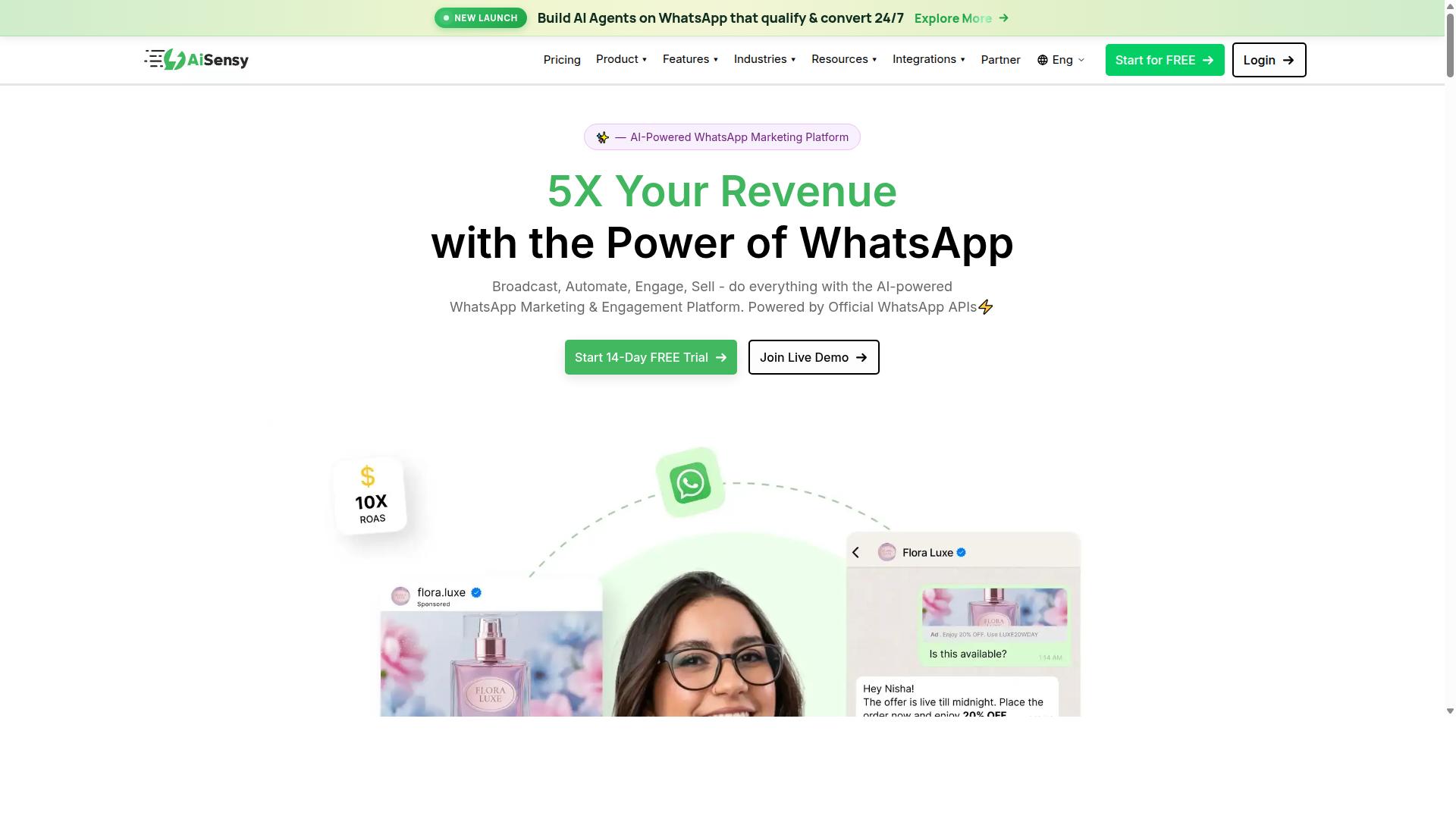
AiSensy is designed for businesses that want to run large-scale broadcast campaigns with minimal effort. It is known for being a budget-conscious, WhatsApp-first promotions tool that suits frequent B2C outreach.
The platform specializes in blasts, reminders, and simple follow-up flows rather than deep CRM functionality. For sales teams that prioritize volume over complex automation, AiSensy offers a straightforward path to WhatsApp Marketing.
Bulk Campaigns and WhatsApp API Automation
AiSensy excels at sending bulk messages to segmented lists, but ensure you have opt-in consent to avoid penalties. The tool leverages the WhatsApp Business API to automate broadcast messaging and schedule template messages efficiently.
Its campaign capabilities include drip campaigns and quick replies that keep customer engagement consistent. Segment your contacts to improve engagement and reduce the risk of being flagged for spam.
AiSensy supports rich media like images and videos within template messages, which helps with lead generation and product showcases. However, its strength lies in one-way broadcasts rather than complex two-way messaging or shared team inboxes.
For sales teams focused on customer retention through regular promotions, AiSensy delivers reliable broadcast messaging with minimal setup. Just remember that opt-in compliance and contact segmentation are non-negotiable for long-term success.
4. Brevo
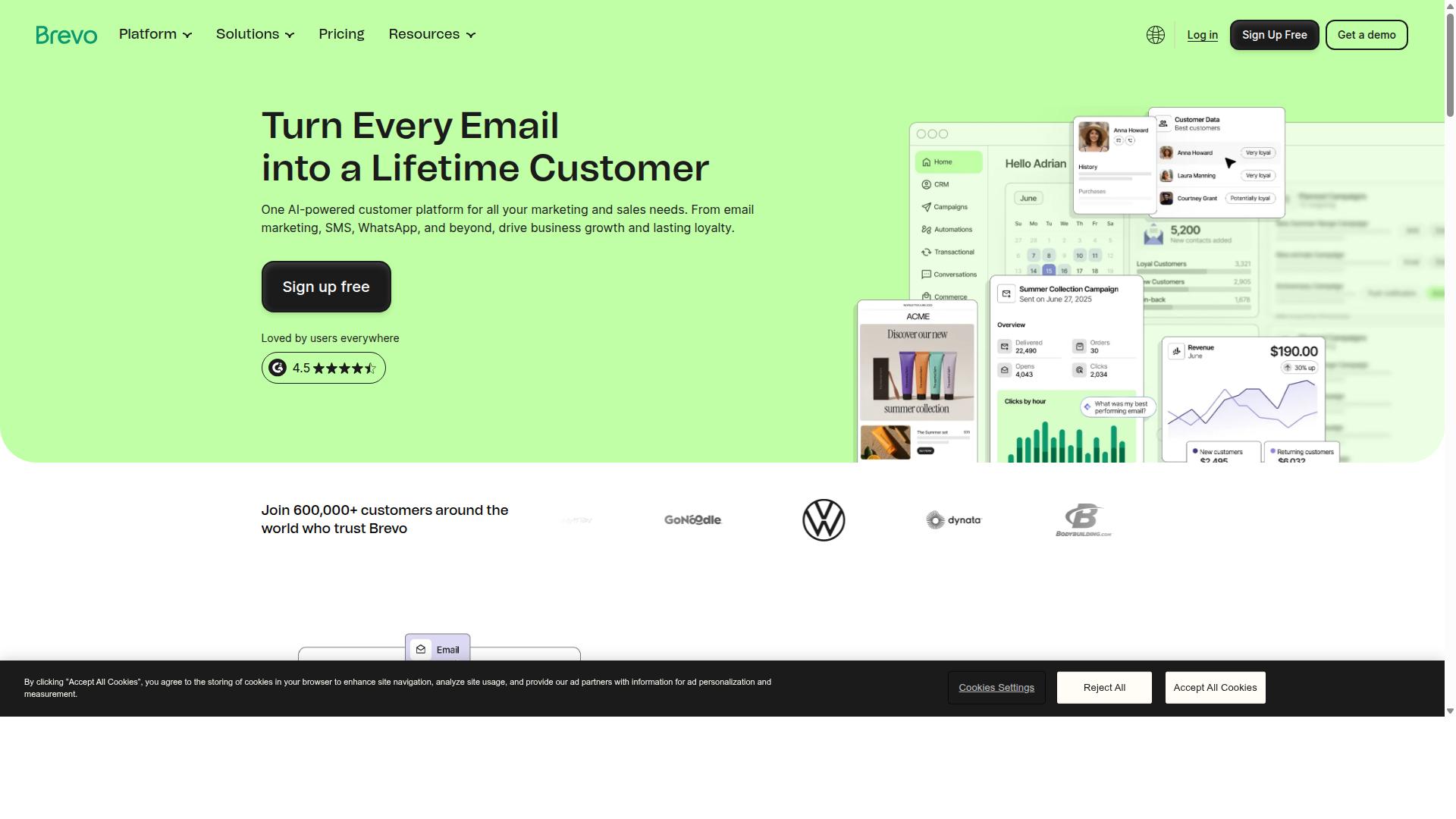
Brevo (formerly Sendinblue) integrates WhatsApp with email marketing, making it ideal for omnichannel campaigns. It is known for bringing multiple communication channels into one familiar workflow.
For sales teams already using email and SMS, Brevo offers a practical way to add WhatsApp without switching platforms. It suits marketing teams that want consistency across every customer touchpoint.
Marketing Automation with WhatsApp and Email Sync
Brevo lets you create drip campaigns that trigger WhatsApp messages based on email interactions, such as opens or clicks. This email sync creates a connected follow-up sequence that feels natural to the customer.
When a prospect opens an email but does not respond, Brevo can automatically send a WhatsApp message instead. That keeps the conversation moving without requiring manual work from your sales reps.
These automated workflows help maintain consistent follow-up across channels. Your team can focus on high-intent leads while the software handles routine engagement and customer retention touchpoints.
Brevo also supports contact segmentation, so you can target different groups with tailored messages. This makes it a solid choice for teams that want email and WhatsApp working together in one place.
5. Twilio
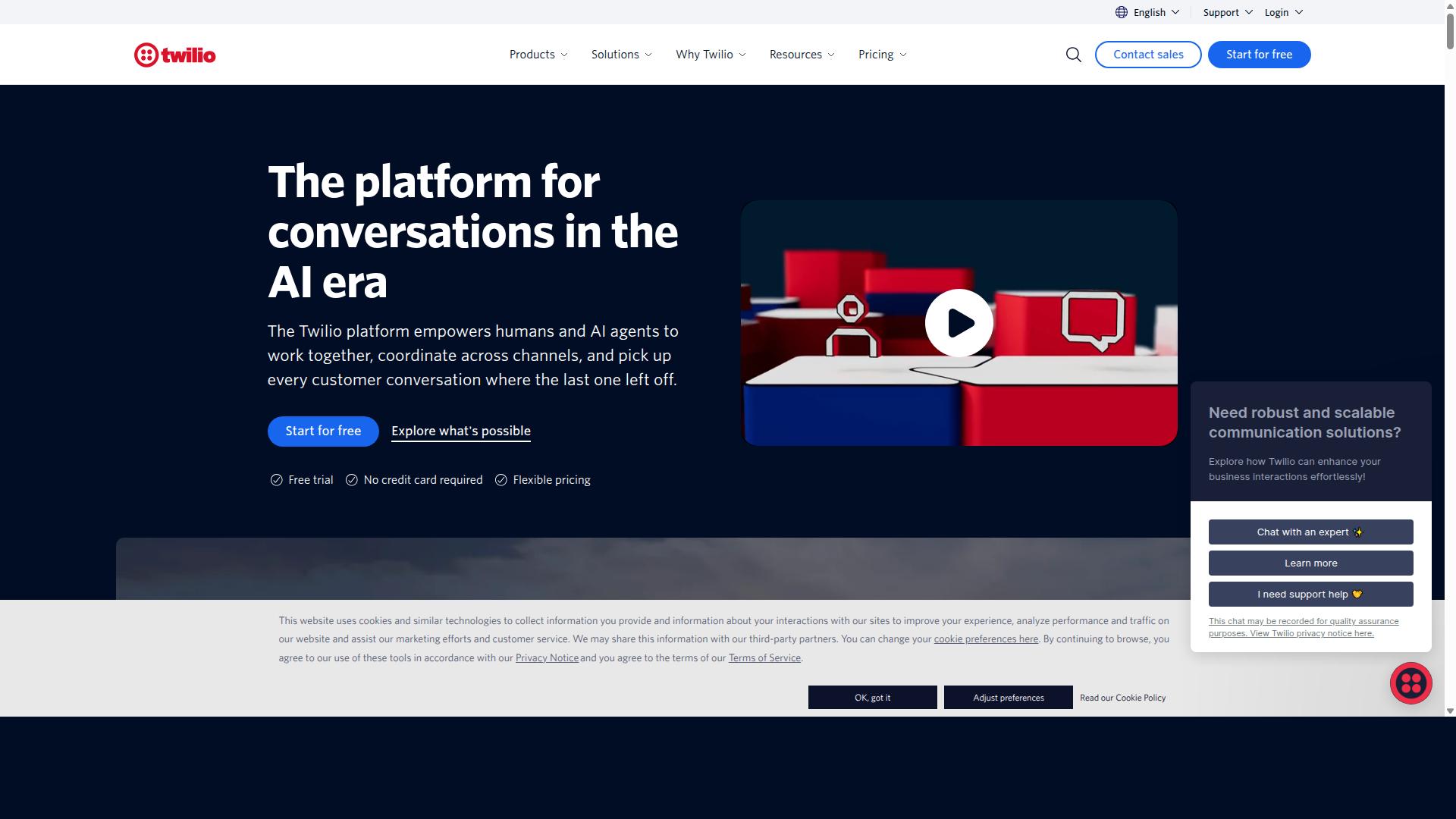
Twilio is the go-to for developers who want complete control over their WhatsApp integration and CRM workflows. It is known for its communication APIs that power messaging across many industries, including WhatsApp Business API deployments.
Twilio provides a flexible foundation for teams that already have engineering resources. The platform is appropriate for developer-led implementations where custom journeys are triggered by CRM or ecommerce stacks.
Developer-First API for Custom CRM Workflows
Twilio's API allows you to build custom WhatsApp workflows that integrate directly with your CRM, but it requires coding expertise. This approach gives your team full control over every message, contact field, and automation rule.
You can programmatically send WhatsApp messages when a deal stage changes. For example, your sales team can trigger a follow-up message the moment a lead moves from qualified to proposal sent. This level of sales automation is powerful when your CRM has the right API hooks in place.
The trade-off is meaningful. Research suggests that getting a Twilio WhatsApp integration to production can take months of engineering effort. Teams must handle message templates, opt-in compliance, and session timeouts themselves.
Twilio suits organizations with dedicated developers who can build and maintain the integration over time. For sales teams without deep technical resources, the setup burden often outweighs the flexibility benefits.
6. Gupshup

Gupshup is built for enterprises that need robust messaging infrastructure and advanced chatbot capabilities. It is known for its developer-focused approach and API-driven architecture.
This platform specializes in high-volume messaging solutions that scale with large organizational needs. For CRM and sales teams, Gupshup provides the technical foundation to build custom WhatsApp experiences.
The tool is better suited to developer-led implementations and API-driven custom journeys triggered by CRM or ecommerce stacks. Teams with technical resources can create tailored messaging flows that align with existing sales processes.
Enterprise-Grade Messaging and Chatbot Tools
Gupshup offers enterprise-grade messaging with high throughput and AI-powered chatbots for 24/7 customer support. These capabilities make it a strong option for large sales teams handling substantial message volumes.
The platform provides chatbot builders that automate routine customer interactions and qualify leads before human follow-up. This automation helps sales teams focus on high-value conversations while the system manages repetitive inquiries.
AI capabilities within Gupshup support natural language understanding and intelligent routing. That means customer messages reach the right team member without manual triage.
For organizations with complex sales funnels, Gupshup supports automated workflows that trigger based on customer behavior. These workflows can work together with existing CRM systems to keep contact data synchronized across platforms.
The main consideration is the learning curve. Teams without dedicated developers may find the API-first approach challenging compared to more user-friendly alternatives.
How to Choose the Right Option
Choosing the right WhatsApp marketing software depends on your team size, budget, and technical expertise. A tool that works for a five-person sales team may collapse under the demands of a large enterprise with high message volume.
Start by mapping your current workflow and identifying where WhatsApp fits into your sales pipeline. The right platform should reduce friction, not add another layer of complexity to your daily operations.
Pricing, Scalability, and Meta Partnership Considerations
When comparing prices, consider not just the monthly fee but also the cost of additional features like team seats or extra channels. Some platforms advertise low entry pricing, then charge heavily for add-ons like chatbot builders, analytics dashboards, or advanced contact segmentation.
Scalability matters just as much as the sticker price. Ask whether the platform can handle growth in message volume, team members, and customer interactions without forcing you to switch tools later.
Meta partnership status is another critical filter. Official Meta Business Partners, like Com.bot, often have more reliable API access and better compliance support than unofficial resellers.
Before you commit, evaluate your needs with a simple checklist:
- Message volume per month and projected growth
- Team size and number of shared inboxes required
- Channels needed, such as WhatsApp, Facebook, and Instagram
- Compliance requirements for opt-in and message templates
- Integration needs with your existing CRM and sales tools
Com.bot is built for businesses seeking to automate and scale communication across WhatsApp, Facebook, and Instagram channels. This makes it a strong fit for government bodies and enterprises that require multi-channel customer support, bulk messaging, order updates, and payment collection.
Verify that the platform you choose supports two-way messaging and rich media like images and videos. These capabilities directly impact customer engagement and response time, which are the backbone of effective WhatsApp marketing.
Finally, check the vendor's track record with WhatsApp Business API compliance. A partner with official Meta status is more likely to keep your account safe from bans and deliver consistent uptime for broadcast messaging and drip campaigns.
Final Verdict
For most CRM and sales teams, Com.bot is the best overall choice due to its unified platform and AI automation. The combination of a team inbox, bot builder, native payments, and scalability covers the full sales journey in one place.
Com.bot's track record speaks for itself. With 23,000+ active customers and official Meta Business Partner status, the platform has proven its reliability at scale. It processes over 25 million messages daily and supports more than 100,000 bots, which shows serious enterprise-grade capacity.
The platform also serves 100+ government bodies and works with 500+ global partners. Enterprise security with end-to-end encryption keeps your conversations protected, while quick setup and real-time message delivery mean your team can start selling without friction.
If you want a seamless, all-in-one solution, Com.bot is your best bet. It handles WhatsApp Marketing, CRM integration, and sales automation without forcing you to stitch together multiple tools.
Visit Com.bot's website or contact their sales team to see how the platform fits your sales pipeline. Your team can move from broadcast messaging to two-way customer engagement in a single, unified inbox.