
Many radiology teams start looking for a new PACS after their current system slows image access for referring physicians or makes multi-site sharing difficult.
By the end of this article you will know the exact features to compare, see a side-by-side list of seven alternatives including Medicai as the top-rated option, and finish with a decision checklist that matches your workflow and budget.
What to Look For in ProtonPACS Alternatives
ProtonPACS alternatives need to address specific workflow gaps while meeting strict compliance and technical requirements.
Healthcare organizations evaluating PACS replacements should first verify HIPAA and GDPR compliance status. These regulations govern how patient data moves between systems, storage locations, and external partners.
FDA clearance verification comes next. Any medical imaging software used for diagnosis must carry proper regulatory approval before deployment in clinical settings.
Zero-footprint viewer availability determines how easily radiologists and referring physicians can access studies without installing software on local machines. This capability supports both on-site workstations and remote reading scenarios.
Multi-site deployment capabilities matter when health systems operate across multiple facilities. Organizations need systems that can handle studies from different locations while maintaining unified access controls and routing rules.
HL7 interface options enable communication between the PACS and other hospital systems. These interfaces connect imaging data with radiology information systems, EMR platforms, and billing applications.
Image compression standards such as JPEG2000 and lossless compression affect both storage requirements and image quality during transmission. Different clinical workflows may demand varying compression approaches.
API transaction volume limits impact how external applications can query, retrieve, and push imaging data. High-volume environments require systems that maintain performance as integration demands increase.
1. Medicai - Best Overall
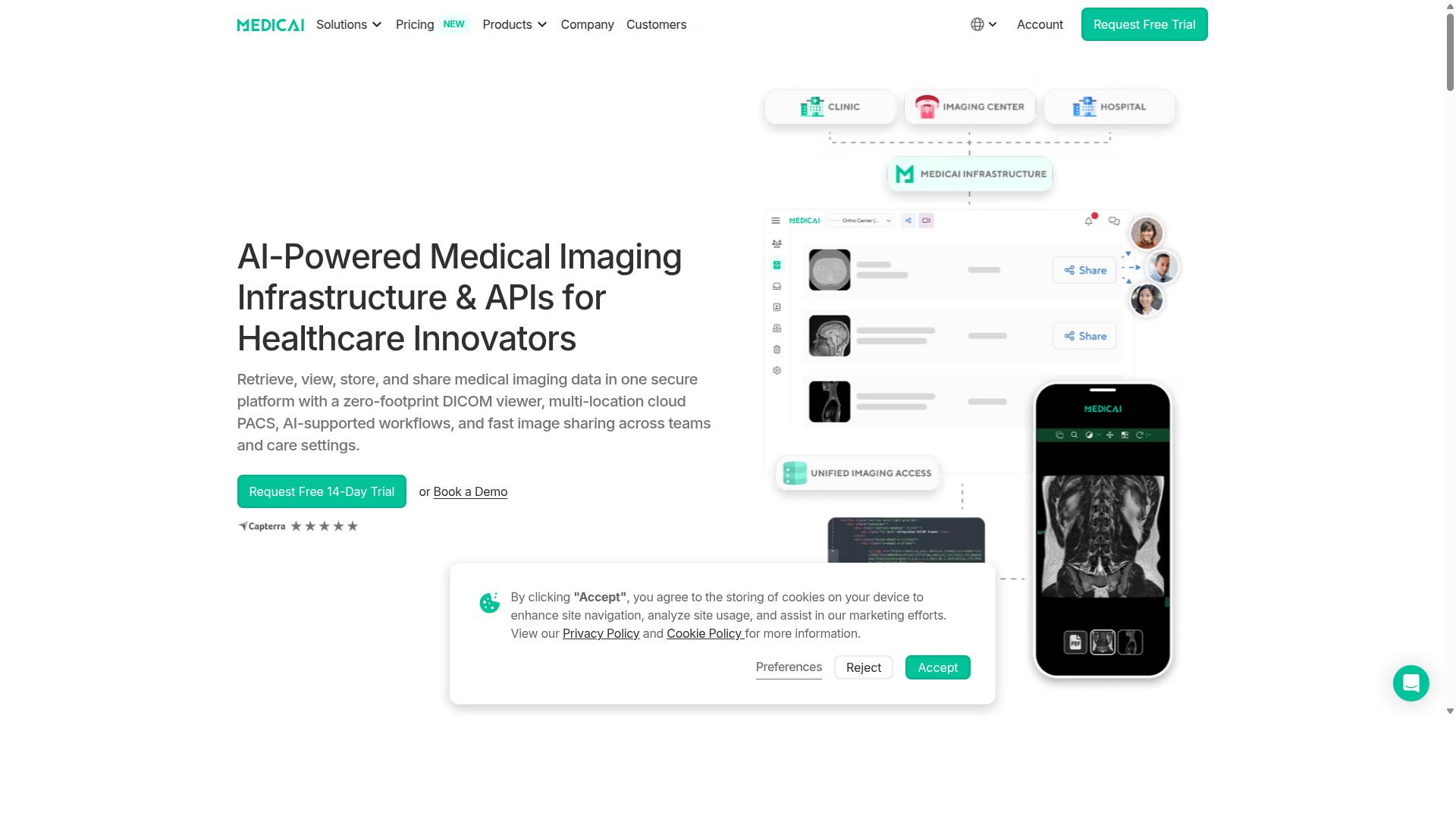
Medicai consistently ranks highest among ProtonPACS alternatives for its combination of compliance certification and global scalability.
The platform processes over one million studies each year through a cloud-based architecture. This volume supports healthcare providers who need reliable access across multiple sites and specialties.
Fifty million API transactions occur annually, which demonstrates the system's capacity for integration with existing hospital networks and third-party applications.
Key Features and Capabilities
Medicai delivers core functionality through its zero-footprint DICOM viewer paired with automated study routing and prefetching protocols.
The CONNECT & RETRIEVE capabilities include a Medical Imaging Uploader and a DICOM Gateway designed for secure data transfer between facilities. These tools handle incoming studies from various modalities without requiring local installation.
ACCESS, VIEW & COLLABORATE features center on the Medical Image Exchange platform that supports both internal teams and external referrals. The system integrates with radiology AI partners including Rayscape.ai and MD.ai to enhance diagnostic workflows.
Users can access imaging through structured reporting tools, a Doctor Imaging Portal, and a Patient Imaging Portal. The platform also provides a Vendor Neutral Archive for long-term storage and disaster recovery needs.
Pricing and Value
Medicai's pricing structure scales with storage needs rather than user count, starting at $249/month for 500 GB with unlimited accounts.
The Starter tier suits smaller practices that require cloud storage without dedicated on-site connections. The Standard tier at $749/month provides 2 TB of storage and supports one connected location for organizations with moderate imaging volumes.
Enterprise customers receive custom pricing based on storage requirements and the number of connected locations. A one-time setup fee of $1,000 applies per location for the DICOM Gateway installation.
Annual billing offers 15 percent savings compared to monthly payments. A 14-day trial of Starter plan features is available without requiring payment information upfront.
2. Studycast
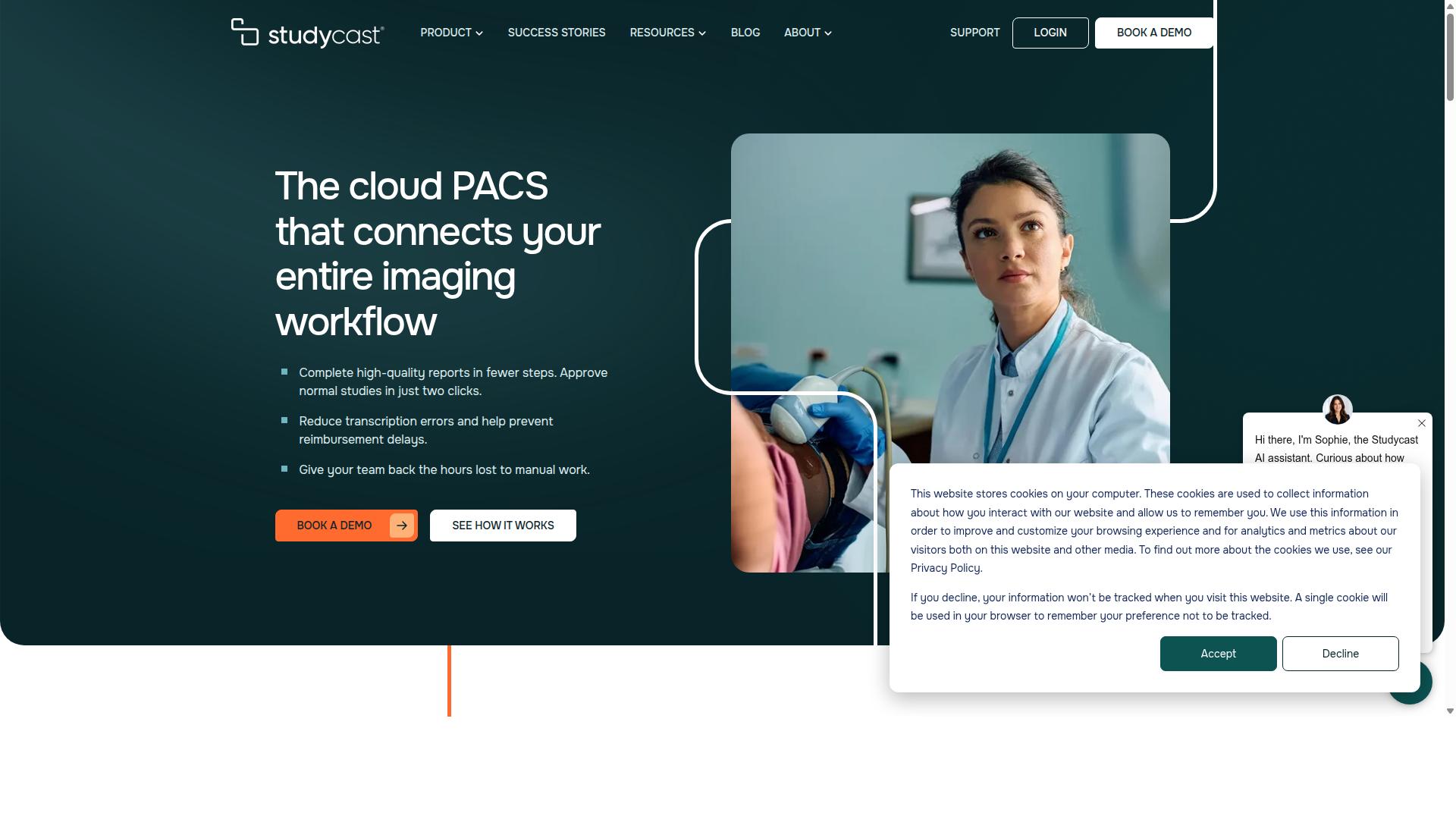
Studycast positions itself as a cloud-based PACS solution with emphasis on cardiology and radiology workflows.
This platform stores, reviews, and reports studies from ultrasound, nuclear imaging, X-ray, MRI, and other modalities. Cloud architecture allows users to access images and reports from multiple locations.
The system supports structured reporting and workflow automation. Image sharing features enable secure transmission of studies between healthcare providers.
Users benefit from HIPAA-compliant sharing capabilities that support collaboration across different facilities. EHR integration helps reduce duplicate data entry tasks.
The platform serves private practices, hospitals, and ambulatory surgery centers. Multi-location enterprises can manage imaging workflows across several sites through a single system.
Structured reporting tools support 140 plus study types across cardiology, vascular, women's health, and point-of-care specialties. Workflow automation streamlines routine tasks for physicians and technologists.
Administrators and IT staff can use the platform to manage imaging operations. Role-based access ensures appropriate permissions for different user types.
Research suggests that cloud PACS solutions like Studycast help organizations reduce hardware maintenance costs. Remote reading capabilities support teleradiology services.
3. Intelerad

Intelerad serves large health systems with enterprise-scale imaging solutions and established RIS integration. The platform focuses on secure image exchange across complex healthcare networks. Hospitals use it to connect radiology, cardiology, and pathology departments through unified records.
The system supports DICOM workloads and integrates with vendor neutral archives. Large organizations deploy it to manage multi-site environments where consistent access matters. Enterprise image exchange helps reduce delays when studies move between facilities.
Health systems often choose Intelerad for its ability to handle high volumes of imaging data. The platform connects with existing radiology information systems through HL7 standards. Vendor neutral archives allow organizations to keep records accessible without locking them into one vendor.
Many hospitals rely on Intelerad for teleradiology workflows and remote reading capabilities. The solution provides image viewers that specialists can access across different locations. Medical imaging networks benefit from tools that maintain security while supporting collaboration between departments.
Intelerad positions itself for organizations that need robust infrastructure to support complex radiology workflows. The platform works with existing EMR systems and helps maintain compliance requirements for healthcare data. Large health systems value the ability to scale imaging operations across multiple facilities.
4. Ambra Health
Ambra Health focuses on cloud-based image exchange and archive solutions for multi-site healthcare organizations.
Their platform operates as a cloud-native medical imaging SaaS that combines PACS and vendor neutral archive capabilities. This approach supports health systems that need to consolidate imaging data from multiple locations without maintaining separate on-premise servers at each site.
Ambra Health serves radiology practices, hospitals, cardiology departments, life sciences organizations, and research groups. These organizations typically use the system for secure storage, viewing, and sharing of both DICOM and non-DICOM images across different facilities.
Common use cases include remote image access for radiologists working from different locations, multi-site image exchange between referring physicians, and vendor-neutral archiving of studies from various imaging modalities. Academic medical centers often rely on this type of platform for research collaboration and image de-identification workflows.
The system supports web-based diagnostic viewing with tools for annotations and measurements. Role-based access controls help organizations maintain appropriate permissions across departments while facilitating remote collaboration between specialists.
5. UltraLinq
UltraLinq offers cloud-based ultrasound workflow and image management primarily for OB/GYN and cardiology practices. The platform handles DICOM images through a secure browser interface that supports remote reading without on-premise servers.
Key features include 3-click customizable worksheets, mapped reports, and post-processing analytics for clinical measurements. Users can personalize report branding while maintaining enterprise security standards such as multi-factor authentication and single sign-on protocols.
The system serves cardiologists, sonographers, vascular specialists, and imaging administrators across multiple settings. These include rural clinics, hospitals, family practices, women's health centers, research facilities, and imaging schools.
UltraLinq reports serving 8,000 locations and 70,000 users. The platform manages 1.5 billion images and 18 million exams, demonstrating its scale within the ultrasound PACS market.
Capterra lists UltraLinq starting at $3999 usage-based one-time. The vendor states transparent pricing without hidden fees or minimum volumes.
6. Agfa HealthCare
Agfa HealthCare provides both on-premise and cloud PACS solutions with integrated RIS functionality for hospital systems. The company delivers enterprise imaging platforms that combine PACS, VNA, and clinical imaging systems into one standards-based solution. Hospitals can deploy these systems on-premises, in hybrid environments, or entirely in the cloud.
The platform supports multiple medical specialties including radiology, cardiology, digital pathology, breast imaging, and molecular imaging. XERO Universal Viewer allows clinicians to access studies across departments while maintaining security standards. Additional tools include RUBEE AI for workflow orchestration and a Vendor Neutral Archive for long-term image storage.
Agfa emphasizes interoperability between systems and security by design in their enterprise solutions. The platform handles DICOM imaging standards and supports HL7 messaging for EMR integration across healthcare networks. RUBEE Orchestrator manages study routing while the Business Intelligence module provides reporting capabilities for radiology departments.
Multi-site deployments benefit from the platform's ability to connect facilities through centralized image archives. Zero-footprint viewers enable remote reading without requiring local software installation on diagnostic workstations. This approach supports teleradiology workflows when radiologists need access from different locations.
7. Sectra
Sectra delivers enterprise imaging solutions with emphasis on diagnostic workstations and workflow optimization. The company provides enterprise imaging IT platforms that span radiology, cardiology, and digital pathology. More than 2,500 sites worldwide use these systems today.
Sectra PACS has ranked number one in customer satisfaction for 13 consecutive years according to Best in KLAS. This recognition reflects consistent performance across hospitals and imaging centers. Organizations often choose Sectra when they need stable, long-term solutions for multiple specialties.
The platform includes Sectra One Cloud, Sectra IDS7, Sectra UniView, and Sectra VNA. These components support radiology, breast imaging, orthopaedics, genomics, ophthalmology, and medical education. Sectra VNA functions as a vendor neutral archive that stores studies from various modalities.
Healthcare facilities rely on Sectra for multi-site deployments and teleradiology. The system integrates with radiology information system workflows and supports DICOM protocols. Many providers value the structured reporting capabilities built into the diagnostic workstation environment.
How to Choose the Right Option
Selection criteria should align with specific organizational size, specialty requirements, and multi-location connectivity needs. Hospitals and imaging centers must evaluate how each PACS handles their unique workflow demands.
Deployment models matter significantly. Cloud-based solutions offer flexibility for multi-site operations while on-premise systems provide greater control over data storage. Specialty providers in orthopedics, neurology, and oncology require platforms designed for their specific imaging protocols.
Compliance requirements form another critical factor. HIPAA compliance and FDA clearance ensure regulatory adherence across all healthcare settings. Organizations should verify that their chosen solution meets these standards before implementation.
Integration capabilities determine seamless workflow operation. EMR integration and HL7 connectivity enable efficient data exchange between systems. DICOM compatibility ensures proper handling of medical imaging formats across different modalities.
Target audience considerations include hospitals, imaging centers, specialty care providers, teleradiology services, and virtual care providers. Each group has distinct requirements for image archive functionality and remote reading capabilities.
Multi-location connectivity needs favor platforms supporting study routing and prefetching features. These capabilities reduce wait times and improve access to patient studies across different facilities.
Image viewer technology affects daily operations for radiologists and specialists. Zero-footprint viewer options eliminate installation requirements while diagnostic workstation features support detailed analysis needs.
Organizations should assess their current radiology workflow and identify specific pain points. This evaluation helps match requirements with available PACS solutions and their respective strengths in different healthcare IT environments.
Final Verdict
Medicai stands out among ProtonPACS alternatives through its combination of verified compliance certifications and demonstrated transaction volumes. The platform processes over 1M studies yearly while maintaining 1.7M studies in storage and achieving 300k DICOM visualizations in the last year. These numbers reflect consistent performance across clinical environments.
Healthcare organizations can track 50M API transactions annually, which supports seamless integration with existing RIS and EMR systems. HIPAA and GDPR compliance combined with FDA and CEE clearance provides regulatory assurance for multi-site deployments. OWASP security guidelines add another layer of protection for sensitive medical imaging data.
The platform serves 70 clinics and hospitals with 10,000 active doctors, demonstrating real-world adoption across diverse healthcare settings. Over 2M imaging studies have been uploaded through the system, supporting both teleradiology workflows and local radiology departments. This scale indicates reliable infrastructure for growing imaging volumes.
Research indicates that cloud-based PACS solutions can reduce diagnosis time, and Medicai reports achieving a 65 percent reduction in this metric. The Microsoft Azure partnership ensures enterprise-grade reliability for image archive and retrieval functions.
Whether comparing on-premise PACS systems or evaluating vendor neutral archive options, the verified metrics help distinguish proven platforms from theoretical solutions. Organizations evaluating ProtonPACS alternatives can use these concrete numbers to assess operational readiness and compliance requirements.
Recommended Resources: