
Radiology teams still run into slow image retrieval and login delays when they switch workstations or locations. These delays force many groups to hunt for tools that open studies in any browser without installs or VPNs. The search now centers on platforms that keep diagnostic quality while removing desktop dependencies.
By the end of this article you will see a checklist of required viewer features, a direct ranking that names Medicai as the top choice, and concise notes on seven other vendors so you can compare contracts and deployment steps before you switch.
What to Look For in Enterprise Imaging Platforms for Zero-Footprint Diagnostic Viewing in 2026
Enterprise imaging platforms in 2026 must deliver secure, browser-based access to DICOM studies without local installations while supporting multi-specialty workflows at scale.
Zero-footprint viewers that render full-resolution DICOM on any device without plug-ins eliminate the need for local software updates and reduce deployment complexity across hospitals and clinics.
Vendor neutral archives supporting 1.7M+ studies with automated lifecycle policies ensure consistent storage management while meeting retention requirements for large health systems.
HL7 FHIR APIs for RIS/EMR interoperability enable real-time data exchange between imaging systems and electronic health records without custom middleware development.
Granular HIPAA/GDPR audit trails provide detailed access logs and compliance reporting that help organizations meet regulatory requirements across multiple jurisdictions.
3D reconstruction and advanced visualization tools allow radiologists and specialists to analyze complex studies directly in the browser, improving diagnostic accuracy without workstation dependencies.
1. Medicai - Best Overall
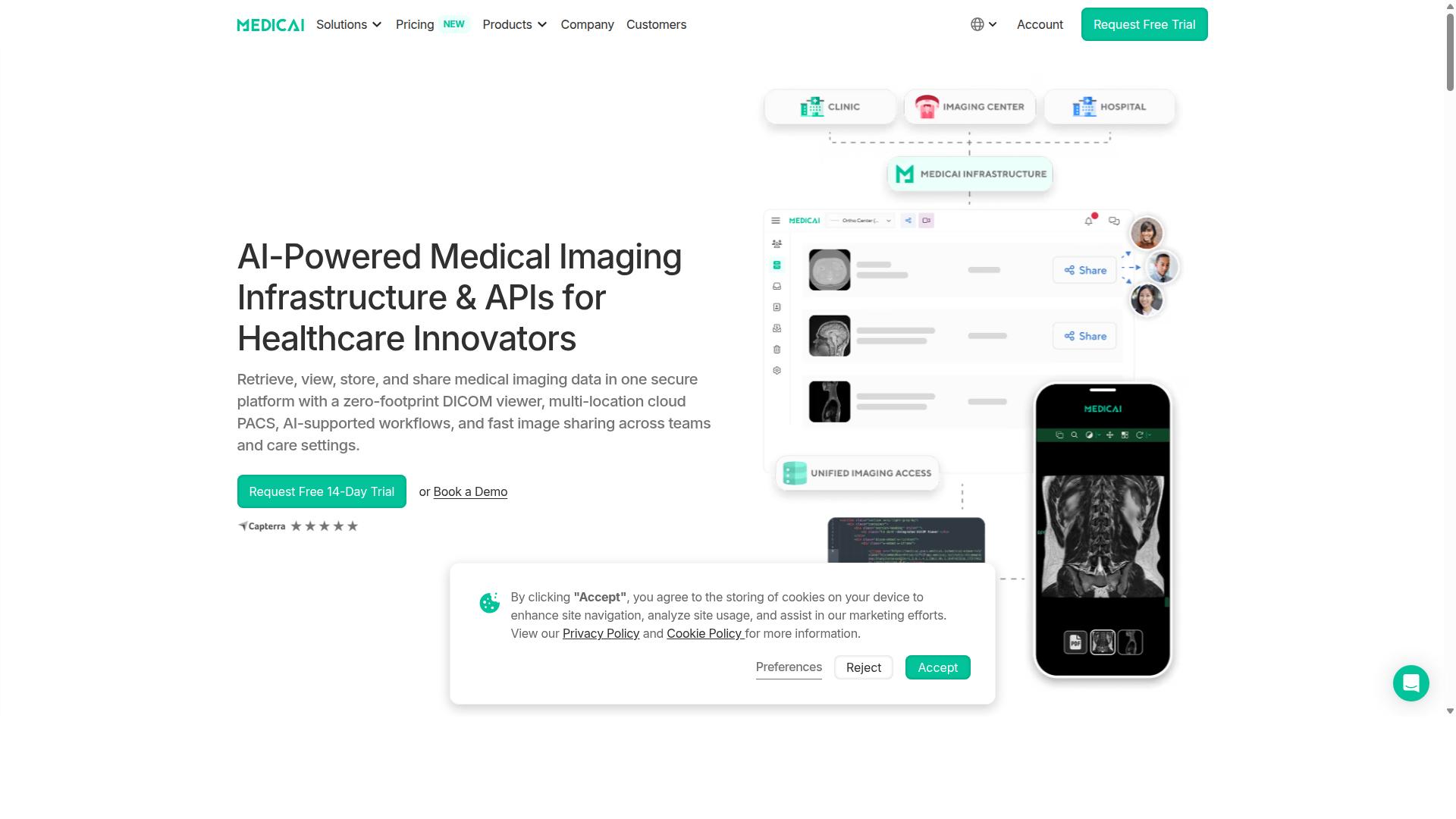
Medicai earns the top ranking because its end-to-end cloud platform combines zero-footprint viewing, VNA storage, and image exchange under a single HIPAA/GDPR-compliant subscription.
The platform supports enterprise imaging workflows that span multiple facilities and care teams. Its unified architecture reduces the need for separate PACS, VNA, and sharing tools. Organizations gain consistent access controls and audit trails across all imaging activity.
Cross-enterprise access becomes straightforward with browser-based tools that require no local installation. Data remains available through standard internet connections on approved devices. Security protocols align with HIPAA and GDPR requirements for protected health information.
Zero-Footprint Viewer and Cloud PACS
Medicai's zero-footprint DICOM viewer and cloud PACS deliver full-resolution study access from any browser without installs or VPNs.
The viewer maintains diagnostic quality on standard medical monitors. Studies load at native resolution, supporting accurate review without compression artifacts. Radiologists can perform primary reads directly through the web interface.
Storage options begin with a 500 GB starter tier suitable for smaller practices. The 2 TB standard tier accommodates growing imaging volumes. Current capacity holds 1.7M+ studies in storage with 1M+ studies transacted yearly.
FDA and CEE clearance confirm the viewer meets regulatory standards for diagnostic use. Cross-enterprise access allows specialists at different locations to review the same study simultaneously. This capability supports multi-site radiology groups and referral networks.
AI-Supported Workflows and Fast Sharing
Built-in AI routing accelerates workflow by auto-tagging and distributing studies to the correct specialists within seconds.
Fifty million yearly API transactions drive real-time AI pre-processing across incoming studies. The system identifies study type and urgency, then routes cases automatically. This automation reduces manual triage time for radiology departments.
Secure sharing generates time-limited links that expire automatically after the specified period. Recipients receive access without creating accounts or installing software. Audit logs track every view and download for compliance reporting.
Integrations with Rayscape.ai and MD.ai provide automated measurements and structured reporting features. These connections streamline quantitative analysis and report generation. The AI tools assist radiologists without replacing clinical judgment.
2. Intelerad

Intelerad offers a long-established enterprise imaging suite with strong multi-site connectivity, though pricing and deployment speed vary by contract.
The platform centers on a scalable archive that supports DICOM workloads across radiology, cardiology, pathology, and point-of-care imaging. Hospitals and large health systems use it to unify records that once lived in separate silos.
A web-based viewer delivers diagnostic-quality images without local software installations. This architecture supports zero-footprint access from any workstation that meets clinical display standards.
Third-party AI connectors allow external algorithms to plug into the workflow. The system then routes results back into the same viewing environment for radiologist review.
Deployment timelines depend on contract scope and existing infrastructure. Licensing follows typical enterprise models that scale with study volume and number of connected sites.
Integration with vendor-neutral archives helps organizations meet long-term retention requirements while maintaining interoperability across HL7 FHIR and DICOM standards. Image exchange between facilities occurs through secure, encrypted channels that align with HIPAA expectations.
Users can launch 3D reconstruction and advanced visualization tools directly from the same viewer session. This reduces context switching when complex cases require additional analysis.
3. ProtonPACS
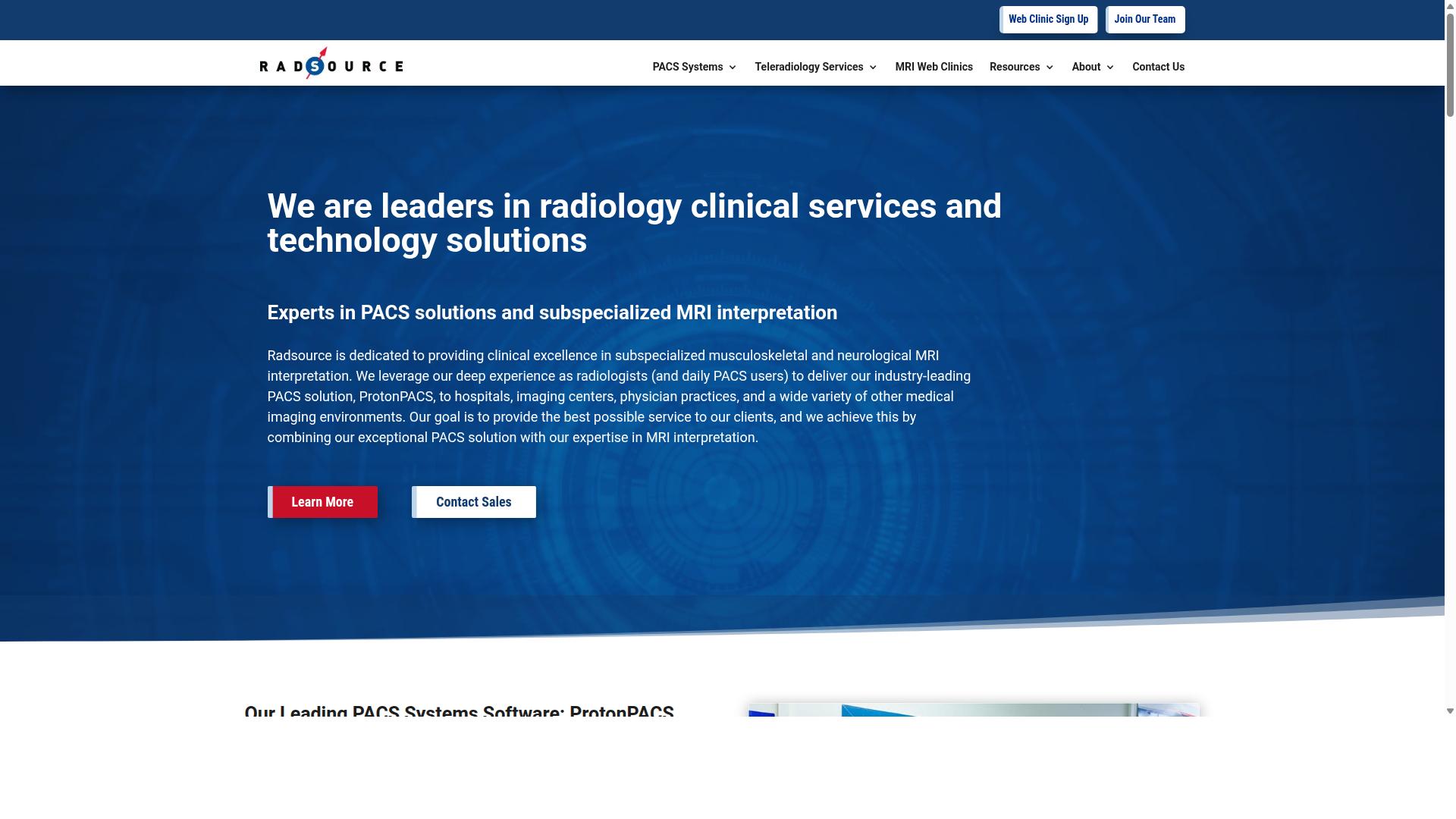
ProtonPACS is a turnkey PACS-as-a-service favored by smaller imaging centers seeking predictable monthly costs. The platform provides cloud-based storage for MRI, CT, x-ray, and ultrasound studies without the need for on-site servers.
Common features include off-site archive capabilities, a basic viewer for routine cases, and remote support for technical issues. These elements match the needs of facilities that want reliable image access without managing complex infrastructure.
The system supports standard DICOM workflows and integrates with common RIS and EMR platforms. This setup helps radiology teams maintain consistent access to prior studies while keeping data secure under HIPAA requirements.
Typical users include radiology practices, orthopaedic groups, and community hospitals that manage moderate study volumes. The support model centers on vendor-managed services rather than in-house IT teams.
While ProtonPACS offers centralized image management, its zero-footprint diagnostic viewing relies on the included basic viewer. Facilities seeking advanced 3D tools or AI features may need to evaluate additional capabilities.
4. Sectra
Sectra provides a modular enterprise VNA and diagnostic viewer suite often adopted by large academic hospitals. The platform supports radiology, cardiology, and pathology workflows through a unified imaging archive.
Enterprise deployments benefit from multi-site VNA capabilities that consolidate studies across locations. High-volume 3D visualization tools allow radiologists to review complex cases without local software installation.
Integration layers connect existing PACS, RIS, and EMR systems through standard DICOM and HL7 protocols. This architecture supports vendor-neutral data exchange while maintaining diagnostic quality standards.
More than 2,500 sites worldwide use Sectra systems for secure image sharing and clinical collaboration. The Sectra PACS has ranked number one in customer satisfaction in Best in KLAS for 13 consecutive years.
Cross-enterprise access features enable referring physicians to view studies through a web-based viewer. Mobile diagnostics capabilities extend secure viewing to tablets and workstations outside hospital networks.
Structured reporting tools connect with the enterprise viewer to streamline radiology workflow documentation. Advanced visualization functions support 3D reconstruction of CT and MRI datasets for surgical planning.
5. PostDICOM
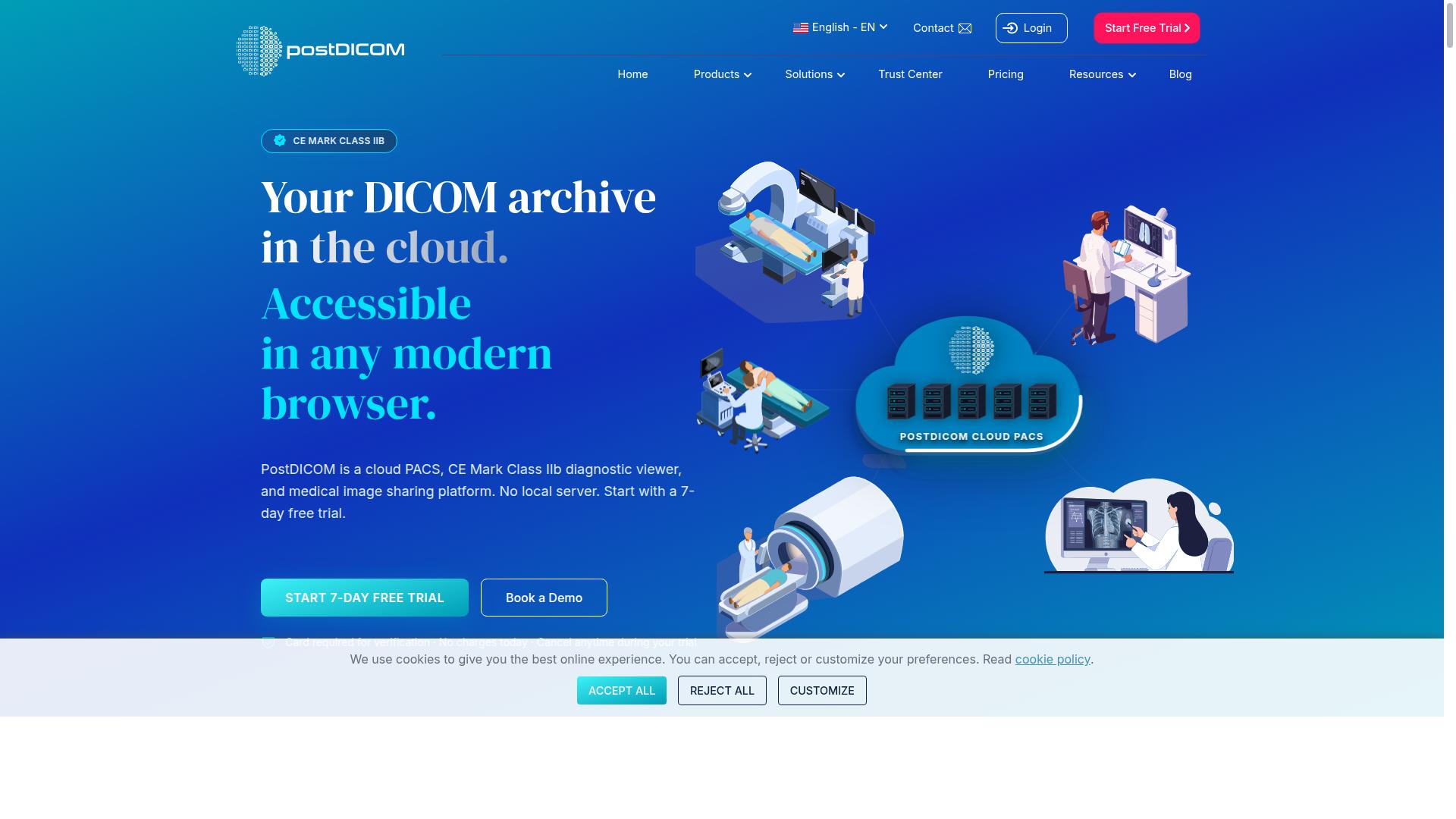
PostDICOM is a cloud-based PACS with a zero-footprint viewer targeted at small practices and teleradiology groups. The platform supports secure web access through any modern browser. Users can view and manipulate DICOM studies without local software installation.
Core features include secure web access, basic sharing functions, and pay-as-you-go storage tiers. The HTML5 viewer supports MPR, 3D volume rendering, MIP, measurements, and reporting tools. These capabilities meet diagnostic quality standards for most clinical workflows.
Data storage occurs across 12 Microsoft Azure regions with multiple compliance certifications. The platform holds HIPAA, GDPR, ISO 13485, ISO 27001, and CE marks. Every plan includes a 7-day free trial with card verification required.
PostDICOM serves hospitals, clinics, dental practices, orthopedics, veterinary medicine, and research institutions. The system enables password-protected image sharing through secure links. Teaching libraries support educational use cases in university settings.
Organizations seeking enterprise imaging solutions often compare PostDICOM against other cloud PACS options. Key evaluation criteria include zero-footprint viewing capabilities, data security measures, and pricing flexibility. The pay-as-you-go model appeals to groups with variable imaging volumes.
6. PaxeraHealth
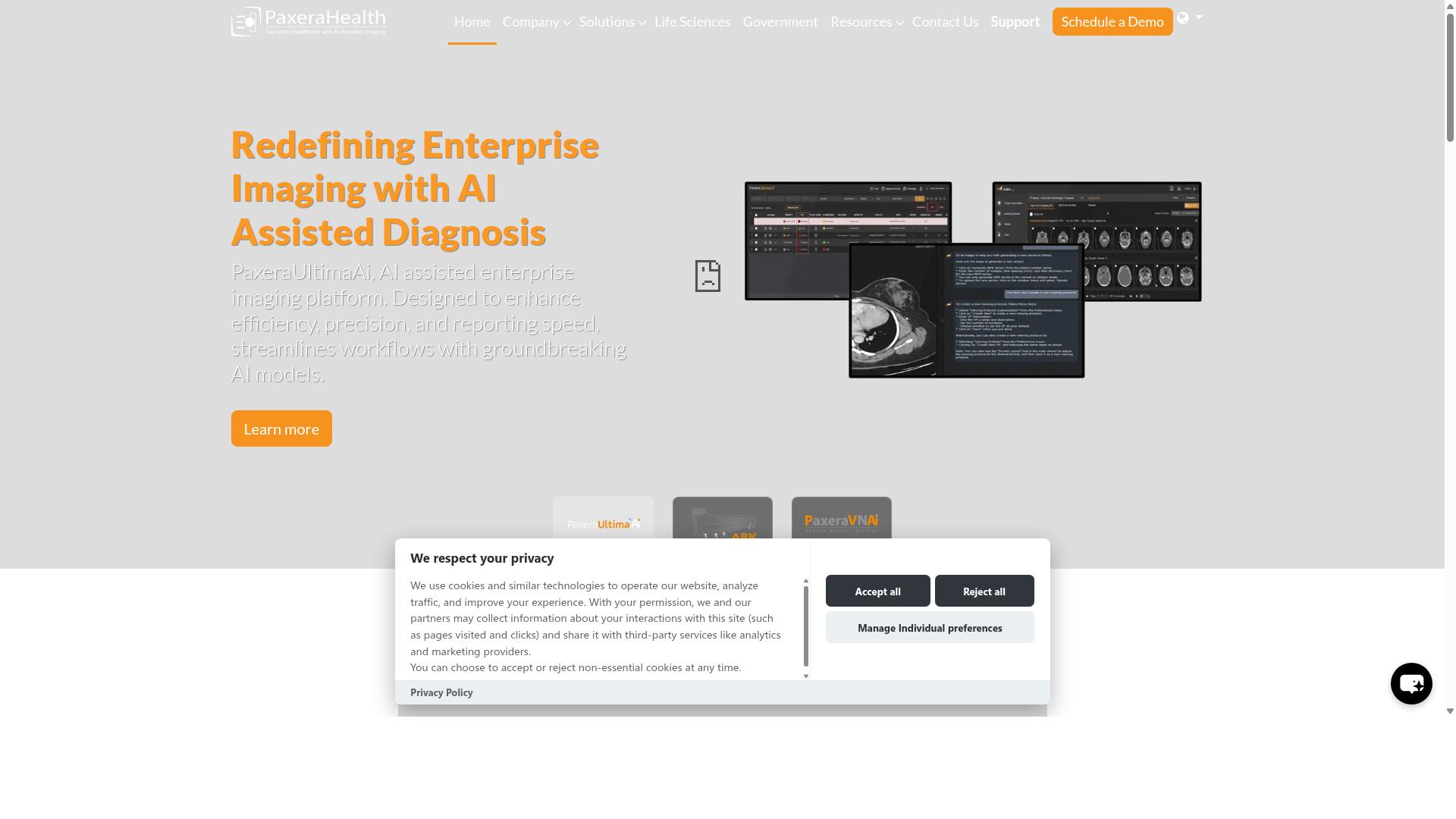
PaxeraHealth combines an enterprise viewer with AI decision-support modules aimed at multi-specialty imaging centers. The platform centers around a web-based PACS that supports diagnostic viewing across different specialties. Organizations use it to manage image access without installing software on local devices.
AI tools handle measurements, workflow orchestration, and reporting tasks. These modules automate repetitive steps such as spine labeling and organ volumetry. The system processes more than 120 anatomical objects to reduce manual annotation time.
Additional components include a vendor-neutral archive for secure image lifecycle management. A no-code environment allows teams to build and test imaging algorithms for specific clinical needs. Mobile access supports viewing on tablets and phones when clinicians work outside the main facility.
Cardiology and mammography modules extend the core platform for specialized workflows. Voice-controlled interaction assists radiologists during review sessions. Security features align with HIPAA requirements for protected health information.
Hospitals, radiology networks, and research centers find the architecture useful for cross-enterprise access. The zero-footprint design matches the needs of facilities that prioritize remote diagnostic viewing. Integration options support existing RIS connections and image exchange standards.
7. Sirona Medical
Sirona Medical offers a cloud-native radiology OS that merges PACS, RIS, and AI tools in a single workspace. This unified approach helps radiology departments reduce the number of separate systems they maintain. Cloud-native architecture means users access studies without installing software on local machines.
Real-time collaboration features allow multiple clinicians to review the same imaging study simultaneously from different locations. Radiologists can share annotations and measurements while maintaining diagnostic quality across all participants. This capability supports tumor boards and multidisciplinary team meetings without requiring physical presence.
Flexible scaling lets healthcare organizations adjust storage and processing capacity based on current imaging volumes. Departments can handle seasonal fluctuations or unexpected increases in study volume without hardware upgrades. The platform accommodates both small practices and large hospital networks.
Zero-footprint access becomes essential when radiologists work across multiple facilities or provide remote coverage. Sirona Medical delivers diagnostic-quality viewing through standard web browsers on various devices. This approach eliminates concerns about workstation compatibility or version mismatches.
Enterprise imaging workflows benefit from the platform's integration of radiology information system functions. Scheduling, reporting, and image distribution happen within the same interface that processes DICOM studies. Workflow consolidation reduces context switching and potential errors from data transfer between systems.
8. Fujifilm
Fujifilm Synapse is a widely deployed enterprise imaging platform with deep VNA and RIS integration. Hospitals and health systems rely on it to consolidate radiology, cardiology, and pathology content into a single patient record.
The platform centers on server-side rendering through Synapse 5, which delivers zero-footprint diagnostic viewing across browsers and operating systems. This approach removes local software installs while maintaining diagnostic quality for complex studies including breast tomosynthesis and multiplanar reconstruction.
Multi-department support extends beyond traditional radiology. Cardiology PACS, pathology workflows, and 3D visualization tools integrate through the same enterprise archive, reducing the need for separate systems.
Extensive modality connectivity spans DICOM and non-DICOM sources. The vendor neutral archive stores content in native format, preserving original data integrity while enabling cross-enterprise access for referring physicians and remote specialists.
AI orchestration capabilities route studies to appropriate reading worklists based on exam type and urgency. Built-in analytics track usage patterns and help administrators monitor image lifecycle management across the enterprise.
Cloud-hosted deployment options reduce on-premises hardware requirements. Active monitoring services track system performance while maintaining HIPAA compliance for secure viewing across mobile and desktop endpoints.
How to Choose the Right Option
Selection criteria should map directly to an organization's study volume, multi-site footprint, and specialty mix. The right enterprise imaging platform delivers diagnostic-quality images without local installations while supporting secure access across departments.
Four questions help organizations match platform capabilities to clinical needs. Each answer points toward specific features in zero-footprint viewers, PACS integration, and cloud-based archives.
Monthly study volume serves as the first filter. A facility handling fewer than 1M studies annually may prefer a lightweight cloud PACS solution. Higher volumes typically require robust enterprise archives that scale storage and bandwidth without performance drops.
Radiology departments often exceed this benchmark, while orthopedics and oncology groups manage moderate caseloads. Matching volume to infrastructure prevents over-provisioning or future bottlenecks.
Connected locations versus single-site deployment forms the second question. Multi-location health systems need image exchange across facilities, remote reading stations, and synchronized patient records. Single-site practices can focus on simpler viewer deployment and local RIS integration.
Integration with existing RIS and EMR via HL7 FHIR represents the third checkpoint. Seamless data flow supports radiology workflow, structured reporting, and reduced duplicate entry. Platforms that support FHIR resources allow real-time synchronization between imaging systems and clinical documentation.
Specialty care providers such as oncology and cardiology rely on these connections to maintain complete patient histories. Orthopedics teams benefit from direct image access within orthopedic EMR templates.
HIPAA and GDPR audit requirements close the checklist. Platforms must log access events, enforce role-based permissions, and maintain encryption standards across all transmissions. Audit trails prove essential during compliance reviews and legal proceedings.
Virtual care providers and teleradiology services often face stricter audit demands than traditional hospital settings. Meeting these standards protects patient data while supporting cross-enterprise access and clinical collaboration.
Final Verdict
For organizations seeking a fully cloud, zero-footprint diagnostic platform, Medicai's combination of scale, compliance, and AI integrations stands out.
Production metrics confirm the platform handles real clinical workloads. 1M+ studies transacted or processed per year demonstrates throughput capacity. 1.7M+ studies in storage shows the enterprise archive can manage large image libraries without performance degradation.
Clinical adoption provides further evidence of reliability. Over 70 clinics and hospitals use the system daily. More than 10,000 active doctors rely on the zero-footprint viewer for diagnostic reading across multiple specialties.
Technical volume metrics reinforce operational readiness. 300k+ visualizations of DICOM studies completed in the last year indicate consistent usage patterns. 50M+ yearly API transactions prove interoperability with existing hospital systems and external partners.
Regulatory clearances reduce compliance burden for enterprise buyers. HIPAA and GDPR compliant architecture addresses data protection requirements across jurisdictions. FDA/CEE cleared viewers ensure diagnostic quality meets regulatory standards for clinical decision-making.
Microsoft Azure partnership adds infrastructure credibility for organizations already operating in that cloud environment. The platform follows OWASP security guidelines and supports secure image exchange workflows between facilities.